Key Features of Java Programming Language
Features of Java
Java is designed as a general-purpose, reliable, and secure programming language. Its features were carefully chosen to solve real-world software problems such as portability, security, memory management, and scalability. These features are the primary reason Java is widely used in enterprise systems, backend services, and long-running applications.
Below is a complete and detailed explanation of all major Java features, written clearly for beginners and accurately for professionals.
Key Features of Java
- Platform Independent
- Object-Oriented
- Simple and Easy to Learn
- Secure
- Robust
- Automatic Memory Management
- Multithreaded
- High Performance
- Distributed Computing Support
- Architecture Neutral
- Portable
- Interpreted and Compiled
- Dynamic
Platform Independent
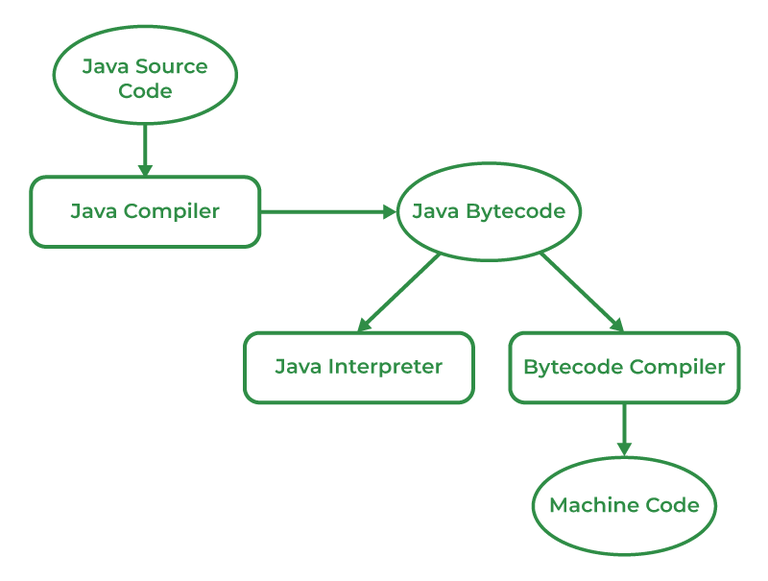
Java is platform independent, which means a Java program can run on any operating system without modification.
Java source code is compiled into bytecode, which is not tied to any specific platform. This bytecode is executed by the Java Virtual Machine (JVM). Each operating system has its own JVM implementation, which converts bytecode into machine-specific instructions.
Because of this architecture, Java follows the principle:
Write Once, Run Anywhere
Object-Oriented
Java is based on object-oriented programming principles. Everything in Java revolves around classes and objects.
Object-oriented design helps in:
- Structuring large applications
- Reusing code
- Improving maintainability
- Reducing complexity
Java supports core object-oriented concepts such as:
- Encapsulation
- Inheritance
- Polymorphism
- Abstraction
These concepts allow developers to build modular and scalable applications that are easier to manage over time.
Simple and Easy to Learn
Java was designed to be simpler than languages like C and C++.
Complex features such as:
- Pointer arithmetic
- Manual memory allocation
- Multiple inheritance using classes
were intentionally removed to reduce errors and complexity.
Java syntax is readable and consistent, making it easier for beginners to understand while still being powerful enough for large systems.
Secure
Security is a built-in feature of Java.
Java programs run inside the JVM sandbox, which prevents unauthorized access to system resources. Java does not allow direct memory access, reducing the risk of memory corruption and security vulnerabilities.
Key security features include:
- Bytecode verification
- ClassLoader security checks
- Restricted access to system-level operations
Robust
Java is designed to handle errors gracefully and ensure application stability.
Robustness in Java comes from:
- Strong exception handling
- Compile-time and runtime checks
- Automatic memory management
- Elimination of pointer-related errors
These features make Java suitable for applications where reliability is critical, such as banking and enterprise systems.
Automatic Memory Management
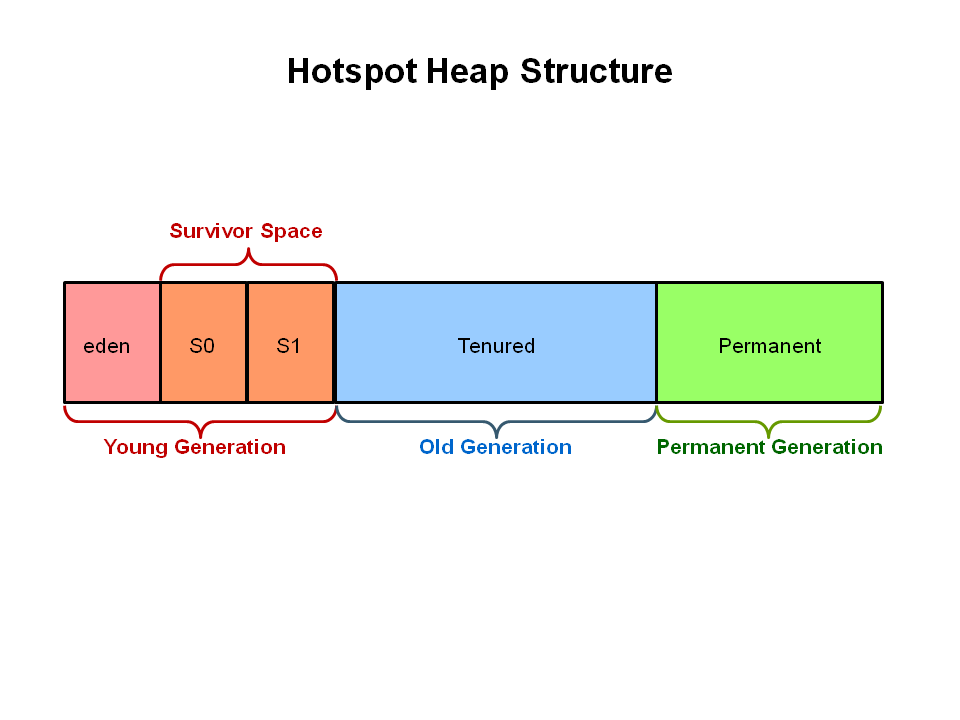
Java handles memory allocation and deallocation automatically using garbage collection.
Developers do not need to manually free memory. The JVM monitors unused objects and removes them from memory when they are no longer required.
This reduces:
- Memory leaks
- Application crashes
- Developer errors related to memory handling
Multithreaded
Java supports multithreading at the language level.
Multithreading allows multiple parts of a program to run concurrently, improving performance and responsiveness. Java provides built-in APIs for creating and managing threads, synchronization, and concurrency control.
This makes Java suitable for:
- High-performance servers
- Real-time applications
- Scalable backend systems
High Performance
Although Java uses an intermediate bytecode, it achieves high performance through Just-In-Time (JIT) compilation.
The JVM identifies frequently executed code and compiles it into native machine code at runtime, improving execution speed.
Over time, the JVM optimizes program execution automatically without requiring changes to the source code.
Distributed Computing Support
Java was designed with networking and distributed systems in mind.
Java provides built-in support for:
- Networking APIs
- Remote communication
- Distributed application development
This makes Java a strong choice for building large-scale distributed and cloud-based applications.
Architecture Neutral
Java programs are architecture neutral, meaning they are not dependent on a specific processor architecture.
Bytecode is designed to run on any CPU architecture that supports a JVM, ensuring portability across different hardware platforms.
Portable
Java programs produce consistent results across platforms.
Data types in Java have fixed sizes, which eliminates platform-specific behavior differences. This ensures predictable execution regardless of the underlying system.
Interpreted and Compiled
Java uses a hybrid approach:
- Code is compiled into bytecode
- Bytecode is interpreted and optimized at runtime by the JVM
This combination provides both portability and performance.
Dynamic
Java supports dynamic loading of classes at runtime.
This allows applications to:
- Load new components dynamically
- Extend functionality without restarting
- Support plug-in based architectures
Dynamic behavior makes Java flexible and adaptable for evolving systems.
Conclusion
Java’s features are focused on stability, security, portability, and scalability. Rather than prioritizing experimental syntax or short-term trends, Java emphasizes long-term reliability and maintainability. These features make Java a preferred choice for enterprise software, backend systems, and applications that must run continuously with minimal failure.